Lovevery Organic Cotton Play Tunnel Review – Still Worth It in 2025?

Short answer:

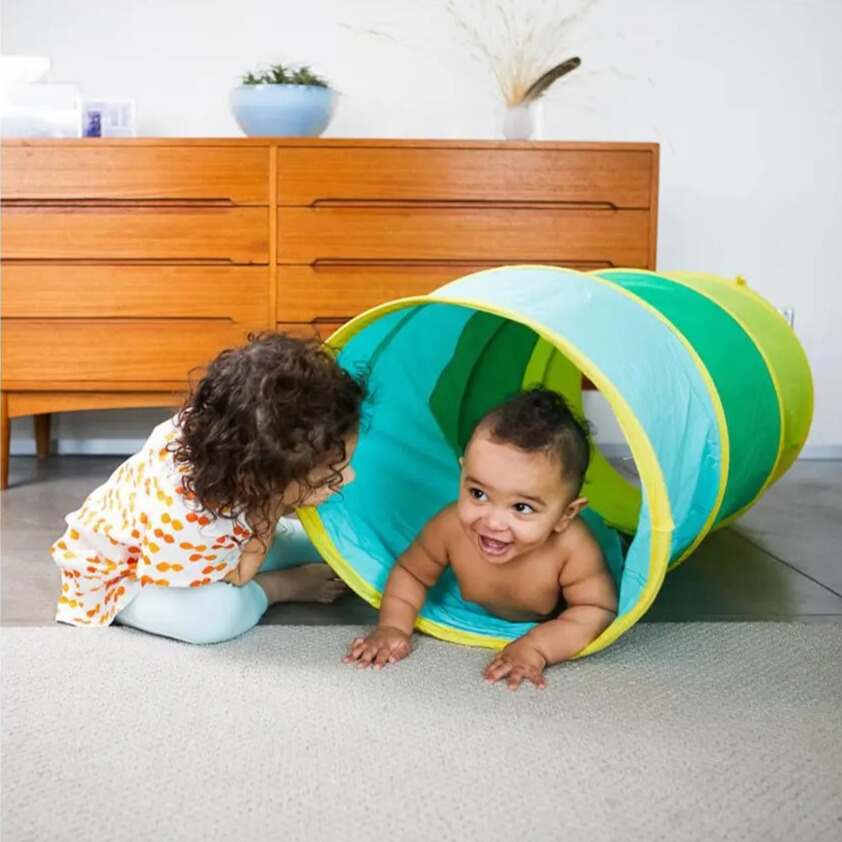
Yes. It’s the only tunnel permanently set up in our living room.


Why I bought it:

  • GOTS-certified organic cotton
  • Free of retardants, BPA, lead and phthalates
  • Survives daily crawl-through traffic from a 3-year-old and all her friends!
  • 100% child safe 

What actually happens in real life:

  • She disappears inside for 20-minute stretches (aka mama finally drinks hot coffee)
  • Doubles as reading nook, puppet theater, car garage, and occasional laundry basket
  • Machine-washable (I’ve done it 7 times — still looks brand new)
The price complaint ($60) vs. the $15–$25 Amazon versions

Yes, it costs more… but those “bargain” tunnels are almost always made of nylon (literally plastic fabric) coated in cheap synthetic dyes and fire-retardant chemicals. They leach phthalates, PFAS, and volatile organic compounds every time a toddler breathes inside them or mouths the rim. I’d rather pay once for something my daughter can safely chew and sleep, and relax knowing that she is playing in something as safe as can be.

→ ourlantern.us/recommends/lovevery-organic-cotton-tunnel

Already have it? Comment below how your toddler uses theirs — I’m stealing ideas!

Links on the Our Lantern blog post are affiliate links. This means if you click them and make a purchase, I may receive a small commission at no extra cost to you. 

Thank you for your support

Looking for more non-toxic household swaps? Download my free checklist now!

27 Non-Toxic Swaps

6 Best Non-Toxic Toddler Toys for Christmas 2025

I’m a Montessori Teacher and I Was Still Buying Toxic Toddler Toys – 5 Truly Safe Ones We Use Instead

Even “natural” wooden toys can be coated in lead paint, PVC, or formaldehyde finishes. Here’s what I trust in my own home now.

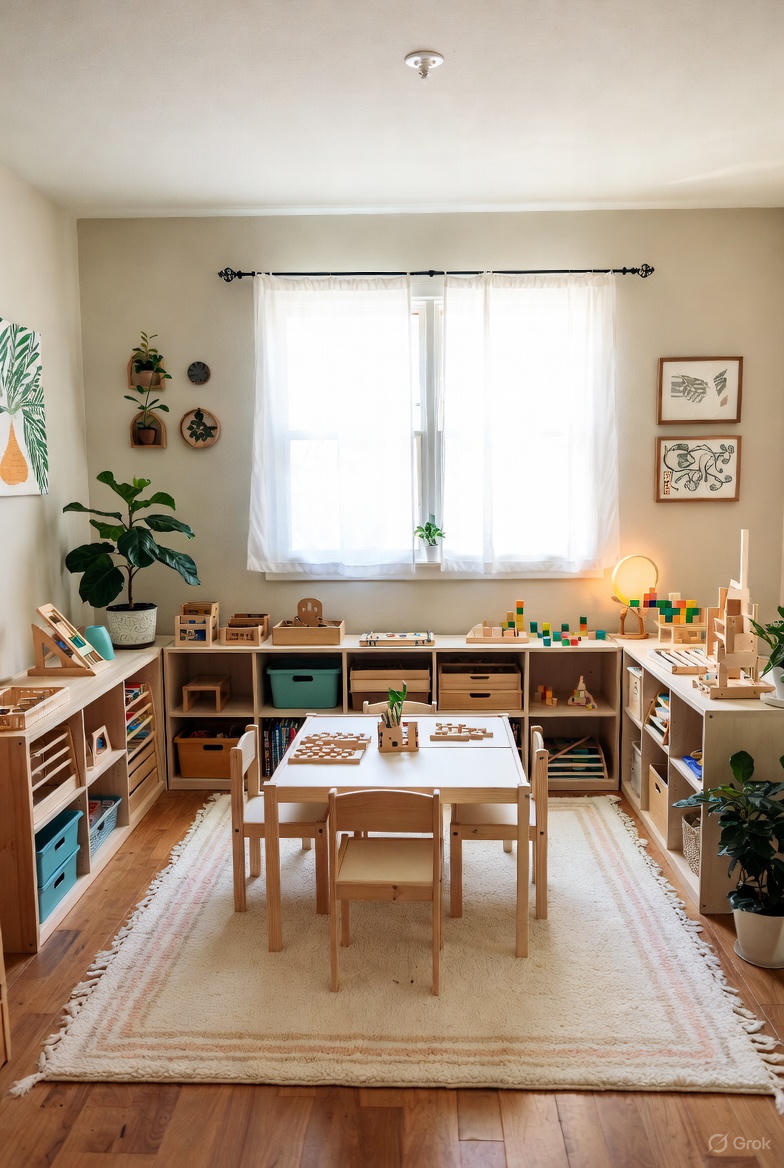
I’ve always rolled my eyes at the screaming-primary-color plastic explosion in most toy aisles. As a trained Montessori guide, I’ve been drawn to calm, low-stimulation, real-material toys since the beginning — simple wood, cotton, silk, ceramic things displayed beautifully low to the ground so children can choose independently.

    But here’s the part that blindsided me:

    Even many of the “eco,” “natural,” and “Waldorf-inspired” toys I was proudly putting on our shelves were quietly off-gassing formaldehyde, coated in cheap lacquer with trace lead, or made with PVC “natural rubber” blends.

    I felt sick the day I learned this. All those years of being “that crunchy Montessori teacher and mama”… and I had still been handing my daughter toys that weren’t actually safe.

    So I went on a mission. I threw out anything questionable, contacted manufacturers, read third-party test results, and tested the survivors with my very active (almost) 4-year-old. These are the only seven toddler toys that passed every test and are actually on our play shelves right now.

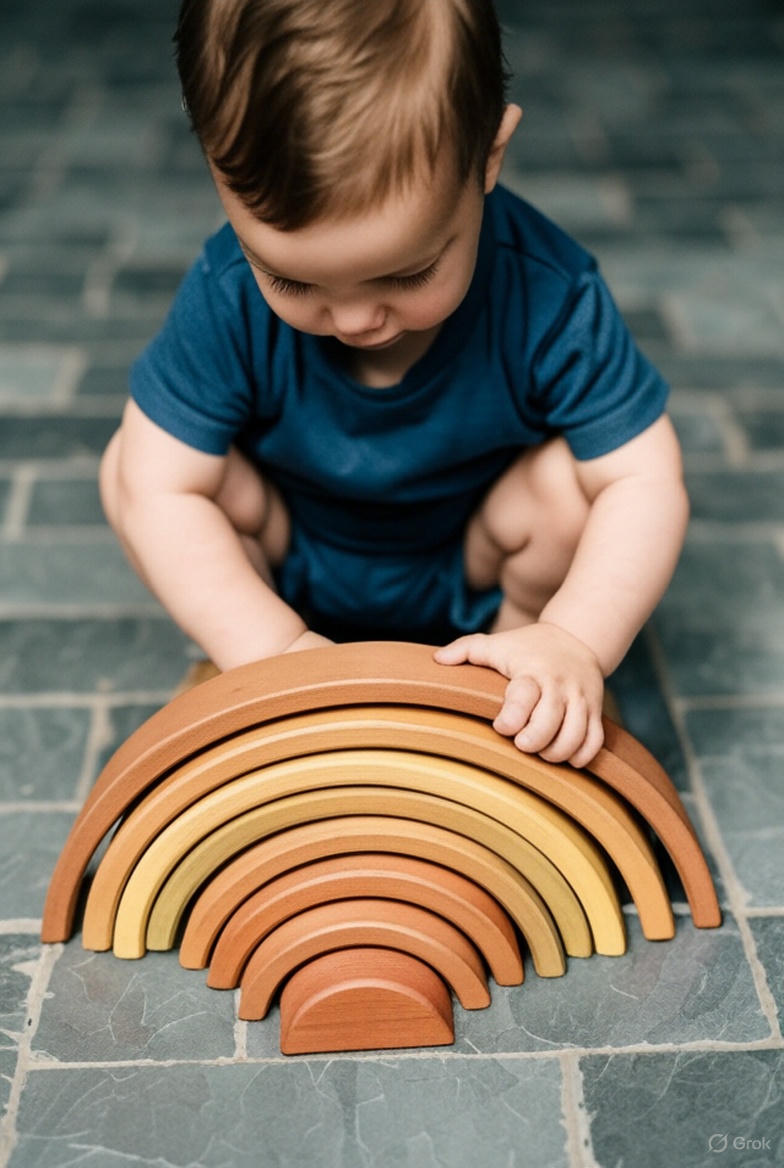
    1. Grimm’s Rainbow Stacker
    Solid wood, finished with non-toxic oil
    No lacquer, no paint, or varnish – just perfectly imperfect arches that get used as bridges, cradles, tunnels, and “rainbows” every single day.
    → ourlantern.us/recommends/Grimms-rainbow-stacker

    2. PlanToys Solid Wood Drum

    Chemical-free rubberwood tree scraps + natural rubber membrane.
    The tone is soft and real — nothing like the headache-inducing plastic versions.
    → ourlantern.us/recommends/PlanToys-Drum

      3. Sarah’s Silks Mini Playsilks

      100 % pure mulberry silk dyed with low-impact, non-toxic dyes.
      Zero finishing chemicals and many colors and styles to choose from

      → ourlantern.us/recommends/mini-playsilks

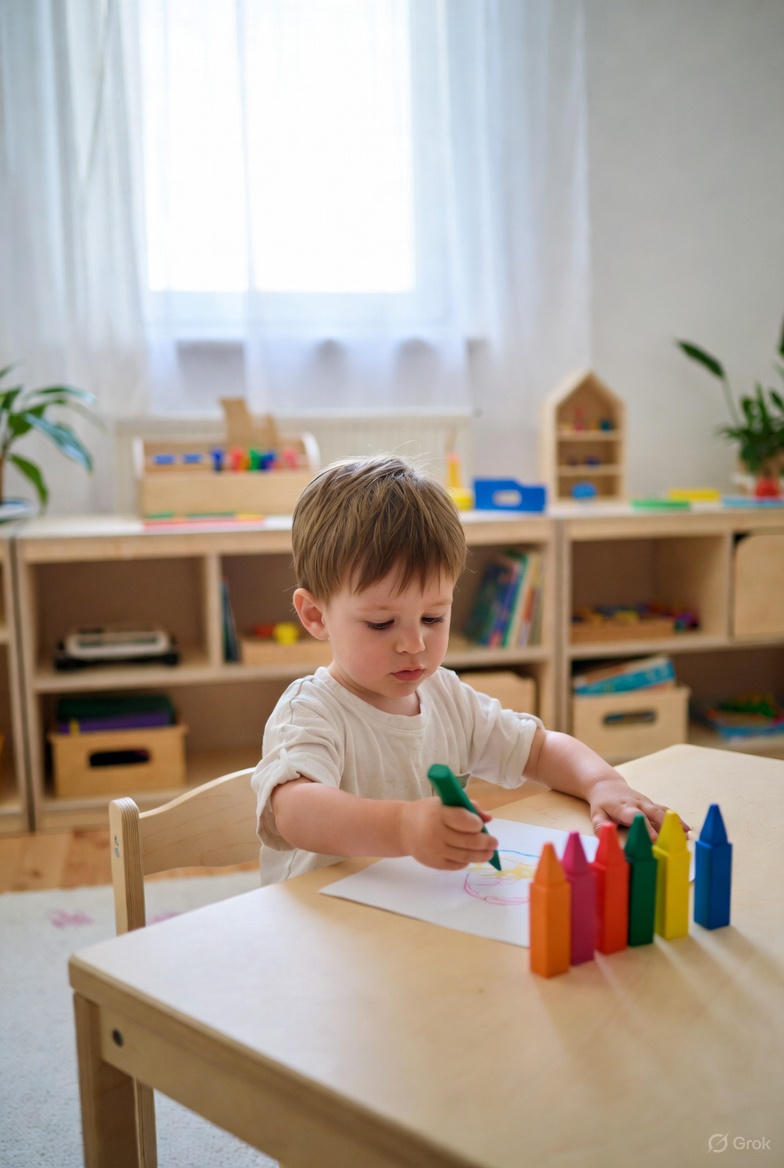
      4. Honeysticks 100 % Pure Beeswax Crayons

      Literally food-grade ingredients.
      When (not if) your toddler eats one, you don’t call poison control.

      → ourlantern.us/recommends/Honeysticks

      5. Wee Gallery Organic Cotton Soft Block Sensory Toy
      GOTS-certified organic cotton, printed with baby-safe inks.
      Gentle crinkle sound, flaps, high-contrast art, machine-washable.

      → ourlantern.us/recommends/WeeGallery-Senrory-Block

      6. Lovevery Organic Cotton Play Tunnel
      GOTS-certified organic cotton, non-toxic dyes, third-party tested, and somehow survives daily crawl-through traffic. It lives permanently in our living room and doubles as a reading nook, puppet stage, and cat hideout.

      → ourlantern.us/recommends/Lovevery-organic-cotton-tunnel

      What I stopped buying (even though they look “natural”):

      • Anything with “natural lacquer” (often formaldehyde)
      • “Beech wood” toys finished in China (almost always trace lead)
      • “Silicone” that isn’t 100 % platinum grade
      • Bamboo anything (usually glued with formaldehyde resins)

      My new rule — no exceptions: Even if the marketing screams “natural,” “eco,” or “Waldorf-inspired,” I dig. I email the company, I ask for third-party lab reports (heavy metals, VOCs, phthalates, PFAS, formaldehyde), I check where the wood is finished, what the glue is made of, and whether the dyes are truly low-impact. If they’re vague, slow to respond, hide behind “proprietary blend,” or can’t verify zero nasties — it doesn’t come through my front door. Period.

      Save this before Grandma goes holiday shopping! Your toddler’s little hormones (and developing brain) will thank you.

      Comment your favorite truly non-toxic toy below — I add the best ones to my storefront all season.

      With love & calm shelves, protected shelves,

      Whitney

      Montessori mama & recovering “I thought natural meant safe” parent 

      Links on the Our Lantern blog post are affiliate links. This means if you click them and make a purchase, I may receive a small commission at no extra cost to you. 

      Thank you for your support

      Looking for more non-toxic household swaps? Download my free checklist now!

      27 Non-Toxic Swaps

      Forever Chemicals Hiding in Your Kitchen (Even When You Think You’re “Safe”)

      My Wake-Up Call + The 8 Swaps I Made for Under $50 Each


      I thought I was careful.

      I ditched Teflon years ago. I can still hear my mom’s voice in my head — “Don’t use metal on that pan, honey! You’ll scratch the coating!” — so when I tossed my nonstick skillets in my early 20s to “be green,” I felt pretty proud of myself.

      Then one day the light really came on, and I started digging deeper.

      That’s when I learned “forever chemicals” (PFAS) aren’t just in obvious nonstick pans. They hide in silicone spatulas, the white lining on most jar lids and bottle caps, grease-resistant food wrappers, microwave popcorn bags, take-out containers, even some dental floss. Study after study linked them to hormone disruption, immune issues, and long-term health risks I couldn’t unsee.

      I went down rabbit hole after rabbit hole. I emailed companies in the middle of the night asking about gasket materials. I stood in the kitchen aisle more than once feeling completely overwhelmed.

      These are some of my favorite kitchen swaps — the ones I’ve collected slowly over the past few years as I’ve learned more and more. None of them cost more than $50, every single one has been obsessively researched (and re-researched), and they’re the quiet changes that — little by little — bring real peace and calm back to the heart of our home.

      1. Cast Iron Pan
      Lodge 10.25″ pre-seasoned skillet
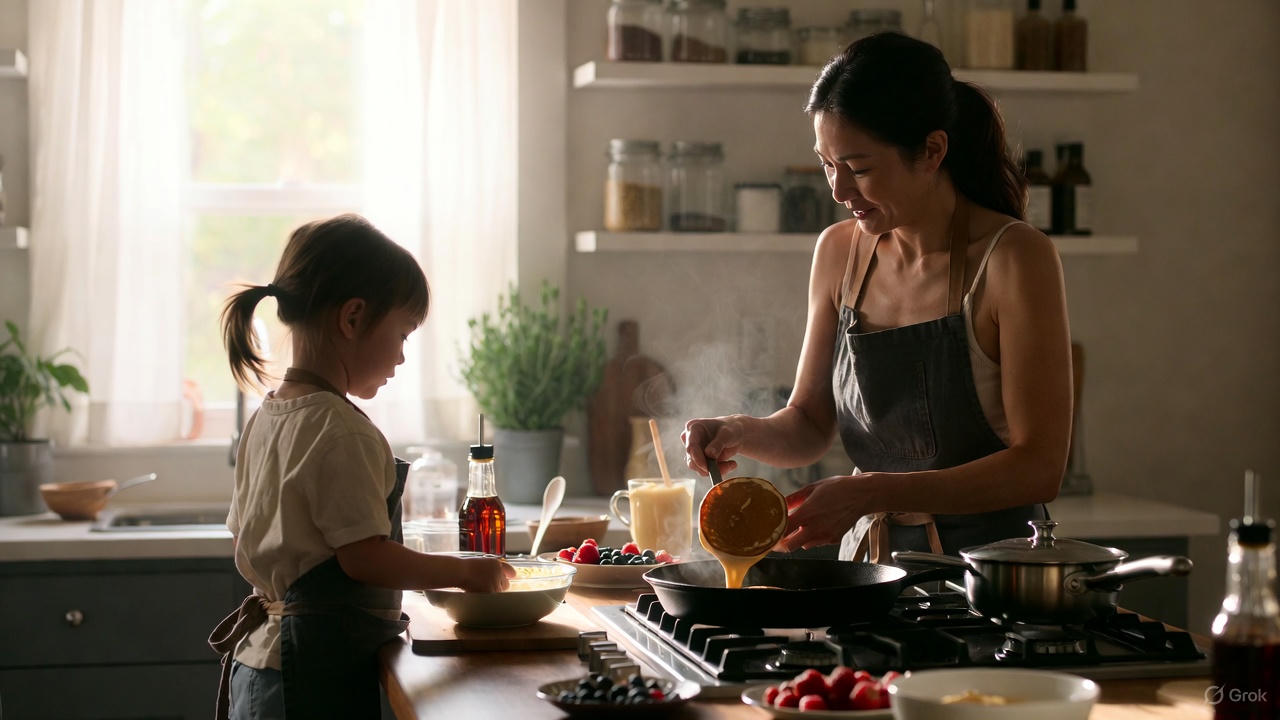
      I tossed every nonstick pan the moment I realized even “ceramic” coatings can contain hidden PFAS or heavy metals. Cast iron has zero coatings and actually adds a tiny bit of beneficial iron to food. We cook eggs, pancakes, bacon, veggies—everything—in this one pan. My daughter flips the mini pancakes herself now.
      ourlantern.us/recommends/lodge-cast-iron

      2. Glass Casserole Dishes (Zero Plastic Anything)
      Moss & Stone 6-Piece Clear Glass Casserole Set with glass lids
      Standard Pyrex and Snapware still have plastic lids or plasticized coatings that off-gas. These Moss & Stone dishes are 100 % glass bakeware with true glass lids—no plastic, no silicone gasket touching the food, oven-safe, fridge-safe, and freezer-safe. I use the round ones for everything including storing leftovers. One set began the replacement of plastic containers in my fridge.
      ourlantern.us/recommends/glass-storage

      3. 100 % Stainless Utensils
      Heavy-duty 18/10 stainless set (no silicone handles)
      Most “silicone-coated” utensils still leach when the coating cracks or gets too hot. These are solid stainless—no handles, no coatings, no lead, no soldier. They’re what I hand my daughter when she wants to stir the soup. They don’t scratch my cast iron and go straight into the dishwasher.
      ourlantern.us/recommends/stainless_utensils

      4. Stainless Straws
      Mason Jar Lifestyle stainless steel straws
      Plastic and silicone straws are obvious PFAS risks. Stainless won’t break when she inevitably drops it. We keep four in the drawer and four in the daypack. Zero microplastics in her farm fresh milk anymore.
       ourlantern.us/recommends/metal-straws

      5. Chainmail Scrubber for Cast Iron
      KnappMade chainmail scrubber
      Those colorful plastic-bristle brushes shed microplastics every time you scrub. This little ring of stainless steel cleans baked-on eggs in ten seconds with just hot water. I keep it hanging on a hook by the sink—my daughter thinks it’s “knight armor” for the pan.
      →  ourlantern.us/recommends/chainmail

      6. Uncoated One-Piece Stainless Lids for Canning & Storage
      EcoPeaceful stainless lids
      Standard Ball/Kerr lids have a white coated liner which contains BPA/BPS, acrylics, vinyls, and PVC-based sealants and/or PFAS. EcoPeaceful lids are pure stainless with a thin silicone gasket that sits on the rim only. I switched about a year ago and now use them for dry storage, fermenting, and water-bath canning tomatoes without worry.
      ourlantern.us/recommends/stainless-lids

      7. All-Glass Flip-Top Bottles with Ceramic Caps
      Otis Classic swing-top bottles
      Most flip-top bottles have plastic-coated lids or silicone gaskets that touch the liquid. Otis uses a porcelain ceramic cap and a thick rubber ring that sits outside the glass neck. We fill them with water, fresh brewed kombucha, and homemade apple cider vinegar.
       ourlantern.us/recommends/glass-bottles

      8. Weck Canning Jars
      Weck tulip & mold jars (½ liter and 1 liter are my favorites)
      Weck jars are 100 % glass with a glass lid and a separate rubber ring that never contacts the food. I started with six small ones for a few fridge items, then slowly replaced these for canning jars. Now leftovers, cut fruit, overnight oats, and roasted tomato sauce all live in these beautiful jars.
      ourlantern.us/recommends/weck-jars

      Total if you bought everything at once: still under $250. But you don’t have to. Pick one this week, one next month. That’s exactly what I did.

      The relief that comes from knowing my daughter isn’t ingesting hidden forever chemicals every time she eats a pancake or drinks from her cup? Priceless.

      If you’re ready for the full 27-swap checklist, grab it free below—zero spam, just the research I’ve already done for you.

      Which hidden PFAS source shocked you the most? Drop it in the comments

      Whitney

      Former Montessori teacher, researching mama, and your non-toxic guide

      27 Non-Toxic Swaps

      Links on the Our Lantern blog post are affiliate links. This means if you click them and make a purchase, I may receive a small commission at no extra cost to you. 

      Thank you for your support